
Mail Us : sdalab9548@gmail.com
Call Us : 97114 66123 | 99990 78071
HealthFlex
×
  • Home
  • About Us
    • SDA Diagnostics
    • Dr. Sonal Dhingra Anand
  • Services
  • Gallery
  • Blogs
  • Contact

Which Blood Tests Are Needed to Diagnose Anemia?
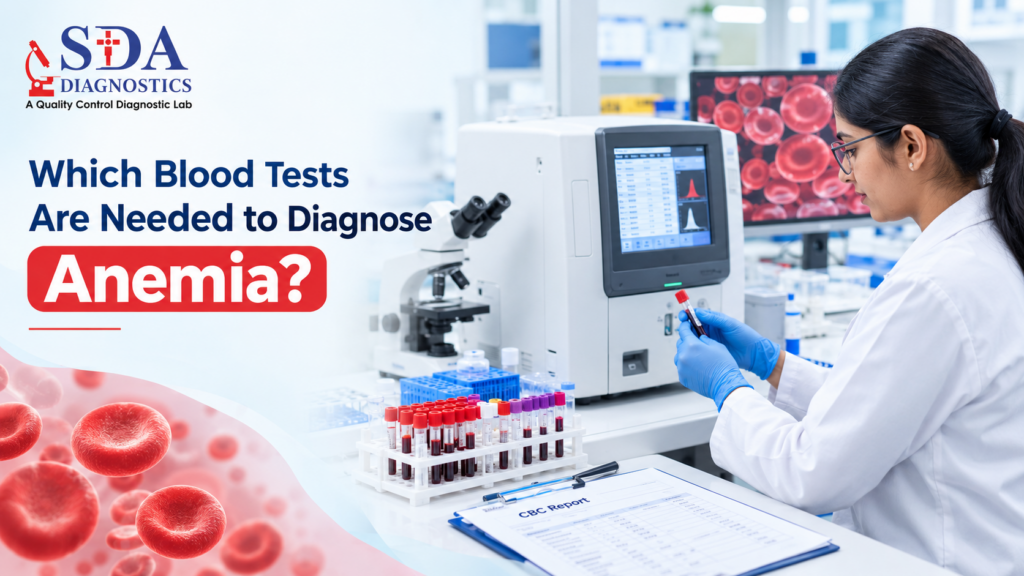
Which Blood Tests Are Needed to Diagnose Anemia?

Which Blood Tests Are Needed to Diagnose Anemia?

Which Blood Tests Are Needed to Diagnose Anemia? This is an important question for people who experience constant tiredness, weakness, dizziness, or pale skin. Anemia is a condition in which the body has a lower-than-normal level of healthy red blood cells or haemoglobin. Haemoglobin carries oxygen from the lungs to different parts of the body. When its level becomes low, a person may feel tired and weak. Blood tests help doctors identify anemia and understand its possible cause, such as iron deficiency, vitamin deficiency, or another medical condition. More information 

What Is Anemia and Why Is Blood Testing Important?

Anemia can develop for different reasons, including a lack of iron, vitamin B12 or folate, blood loss, chronic diseases, or problems with red blood cell production. Some people may have mild symptoms, while others may experience breathlessness, dizziness, or difficulty performing daily activities.

Blood testing is important because symptoms alone cannot confirm anemia. A doctor may recommend one or more tests depending on the patient's age, medical history, symptoms, and initial blood report. The results help determine the type of anemia and guide further investigation and treatment.

Which Blood Tests Are Needed to Diagnose Anemia?

Different blood tests provide information about haemoglobin levels, red blood cell size, iron stores, and vitamin levels. The following are some of the commonly used tests for diagnosing anemia.

1. Complete Blood Count (CBC) Test for Anemia

A Complete Blood Count (CBC) is usually the first and most important blood test used to identify anemia. It measures different components of the blood and provides information about red blood cells.

A CBC report generally includes:

  • Haemoglobin (Hb): Measures the amount of the oxygen-carrying protein in the blood.

  • Red Blood Cell (RBC) Count: Measures the number of red blood cells.

  • Haematocrit (HCT): Shows the proportion of blood made up of red blood cells.

  • Mean Corpuscular Volume (MCV): Measures the average size of red blood cells.

  • Mean Corpuscular Haemoglobin (MCH): Indicates the average amount of haemoglobin in each red blood cell.

Low haemoglobin may indicate anemia. The MCV value can also help doctors identify whether red blood cells are smaller or larger than normal, which provides clues about the possible cause. However, the CBC alone may not identify every underlying cause. <Cite refs={[“turn229842search0″,”turn229842search7”]}/>

2. Serum Ferritin Test to Check Iron Stores

The serum ferritin test measures ferritin, a protein that stores iron in the body. Iron is required to produce haemoglobin, so low iron stores can lead to iron-deficiency anemia.

Doctors may recommend this test when a CBC suggests anemia or when symptoms and medical history indicate a possible iron deficiency.

A low ferritin level commonly supports a diagnosis of iron deficiency. However, ferritin can increase during inflammation or infection, so the result must be interpreted along with other findings.

This test helps doctors decide whether iron deficiency may be responsible for the low haemoglobin level. <Cite refs={[“turn229842search1″,”turn229842search11”]}/>

3. Serum Iron and Total Iron-Binding Capacity (TIBC)

Serum iron measures the amount of iron circulating in the blood. Total Iron-Binding Capacity (TIBC) estimates how much iron the blood can carry through a protein called transferrin.

Doctors may order these tests along with ferritin to understand the body’s iron status more clearly.

These tests can help distinguish iron deficiency from some other conditions that affect iron use. For example, serum iron may be low in both iron-deficiency anemia and anemia associated with chronic inflammation. Therefore, the results should be assessed together rather than individually. <Cite refs={[“turn229842search1″,”turn229842search7”]}/>

4. Vitamin B12 Blood Test

Vitamin B12 is necessary for the formation of healthy red blood cells and the normal functioning of the nervous system. A deficiency can cause anemia and may also lead to numbness, tingling, balance problems, or memory-related symptoms.

A doctor may recommend a vitamin B12 blood test if the CBC shows unusually large red blood cells or if the patient’s symptoms and medical history suggest a deficiency.

In some cases, additional tests, such as methylmalonic acid, may be advised when the vitamin B12 result is unclear. Identifying the deficiency early is important because prolonged vitamin B12 deficiency can cause nerve damage. <Cite refs={[“turn229842search3″,”turn229842search8”]}/>

5. Serum Folate Test

Folate, also known as vitamin B9, is required for the production of healthy red blood cells. A lack of folate can lead to a type of anemia in which red blood cells become larger than normal.

A serum folate test measures the level of folate in the blood. Doctors may recommend it when nutritional deficiency is suspected or when the CBC shows an increased MCV.

Vitamin B12 and folate deficiencies can cause similar blood test changes, but their treatment is different. Therefore, a doctor may check both levels before recommending supplements. Taking folic acid without recognising an underlying vitamin B12 deficiency may improve some blood abnormalities while allowing nerve damage to continue. <Cite refs={[“turn229842search2″,”turn229842search3”]}/>

6. Peripheral Blood Smear Test

A peripheral blood smear involves examining a blood sample under a microscope. It allows the laboratory specialist to observe the size, shape, and appearance of red blood cells.

The test may reveal small red blood cells, unusually large cells, or other changes that provide clues about the type of anemia. It can also help identify abnormal blood cell patterns that may require further investigation.

Doctors may recommend this test when the CBC results are unusual or when a more detailed examination of blood cells is needed. <Cite refs={[“turn229842search7″,”turn229842search13”]}/>

7. Reticulocyte Count Test

Reticulocytes are young red blood cells that are recently released from the bone marrow. A reticulocyte count measures how many of these cells are present in the blood.

This test helps doctors understand how the bone marrow is responding to anemia. A higher count may occur when the body is replacing red blood cells lost through bleeding or increased destruction. A low or inadequate response may suggest reduced red blood cell production.

The result is interpreted along with the CBC and other investigations to help identify the possible cause. <Cite refs={[“turn229842search1″,”turn229842search7”]}/>

8. Additional Blood Tests for Specific Causes of Anemia

If the initial tests do not explain the anemia, a doctor may recommend further investigations based on the patient’s condition.

These may include:

  • Kidney Function Tests: To check whether kidney problems may be contributing to anemia.

  • Thyroid Function Tests: To assess whether a thyroid disorder may be involved.

  • Bilirubin and LDH Tests: To investigate possible increased destruction of red blood cells.

  • Haemoglobin Electrophoresis or HPLC: To identify certain inherited blood disorders, such as thalassemia.

  • Additional Vitamin or Antibody Tests: To investigate selected nutritional deficiencies or problems with vitamin B12 absorption.

Not every patient needs all these tests. The doctor selects investigations according to the suspected cause and initial findings. <Cite refs={[“turn229842search7″,”turn229842search10”]}/>

When Should You Get Tested for Anemia?

Consider consulting a doctor if you experience persistent tiredness, weakness, dizziness, pale skin, shortness of breath during normal activities, or a fast heartbeat.

Testing may also be advised for people with heavy menstrual bleeding, suspected nutritional deficiencies, pregnancy, chronic illnesses, or a history of blood loss. The need and frequency of testing depend on individual circumstances.

Severe breathlessness, chest pain, fainting, or significant bleeding require urgent medical assessment.

For more information about symptoms and investigations, you can also read our related article on Anemia Symptoms, Causes and Treatment. Replace the placeholder with the URL of your relevant website article before publishing.

Conclusion

Understanding which investigations may be required can help patients take the right steps towards diagnosis and treatment. A CBC is commonly the first test, while ferritin, iron studies, vitamin B12, folate, peripheral blood smear, and reticulocyte count may provide further information.

The exact tests depend on the patient’s symptoms and the suspected cause. Early assessment can help doctors identify nutritional deficiencies, blood loss, or other medical conditions that need attention.

If you suspect anemia, consult a qualified healthcare professional for appropriate testing and treatment. Avoid self-medicating with iron or vitamin supplements without understanding the cause of the problem.

Add Comment Cancel


Recent Posts

  • Why You Should Never Ignore a High Fever During the Monsoon
  • Which Blood Tests Are Needed to Diagnose Anemia?
  • Fever During the Rainy Season: When Should You Get Tested?
  • Persistent Fever That Won’t Quit? When to Seek Medical Help
  • Why Fever Testing Is Important During Monsoon Season

Recent Comments

  1. Blood Cancer Diet - SDA Lab Diagnostics on Iron Profile Test: Causes of Iron Deficiency

Patient & Visitor Guide

Plan your visit to our Clinic

More

Ever wondered what a Health Coach does?

Visit our Health Coach Demo!

Categories

  • Allergies
  • Anemia
  • Blood Cancer
  • Blood Test
  • Cancer
  • Diabetes
  • Fever
  • healthy heart
  • Heatlh Checkup
  • kidney
  • Liver
  • Medical Articles
  • News
  • Uncategorized
  • Vitamin Deficiency

Archives

  • October 2026
  • September 2026
  • July 2026
  • June 2026
  • April 2026
  • December 2025
  • August 2025
  • February 2025
  • January 2025
  • December 2024
  • November 2024
  • October 2024
  • September 2024
  • August 2024
  • July 2024
  • June 2024
  • May 2024
  • April 2024
  • November 2015

Text Widget

Fugiat dapibus, tellus ac cursus commodo, mauesris condime ntum nibh, ut fermentum mas justo sitters amet risus. Cras mattis cosi sectetut amet fermens etrsaters tum aecenas faucib sadips amets.

Tag Cloud

allergy symptoms anemia Blood presure Blood Test blood tests cardiovascular health Cholesterol cholesterol levels climate change diagnostic center Meerut Diet early detection Exercise Fitness food allergies Health health awareness healthcare tips Health Checkup health tips healthy habits healthy lifestyle Healthy Living heart heart disease risk heart health hemoglobin levels high cholesterol immune system Iron Deficiency kidney health Lifestyle Changes mental health nutrition Pathology Lab Meerut preventive care preventive healthcare public health red blood cells SDA Diagnostics Meerut self-care Tips triglycerides Weight Management wellness tips

Calendar

October 2026
M T W T F S S
 1234
567891011
12131415161718
19202122232425
262728293031  
« Sep    

About Us

Established in the year 2019, SDA Diagnostics is a trusted Pathology . Quality maintainence and patient satisfaction are our two primary motives and we train our staff each day to remain at power with all the recent advances in our field. In the near future, our pathology lab aims to expand its line of products and services and cater to a larger client base. It is known to provide top service in the following categories: Pathology Labs, Diagnostic Centres, Blood Testing Centres, Urine Testing Labs, 24 Hours Pathology Labs, Computerised Pathology Labs. Our reporting time is minimum and hence we are able to provide results within two hours for most of our tests.

Contact Us

971 146 6123 | 999 907 8071

sdalab9548@gmail.com

114/1, I Block, PVS MALL ROAD, Ambedkar Chowk, opposite Indian Oil Petrol Pump, Meerut, Uttar Pradesh 250004

Copyright © 2023 SDA Lab Diagnostic. All Rights Reserved.
Designed by : Business Promotion
  • →
  • Contact Us
    Contact Form

  • Facebook
  • Phone